Description
Physics is finished, young man. It’s a dead-end street.
Unknown teacher of Max Planck, late nineteenth century
In this course by the term modern, we mean important work that was done after the “Physics is finished” period. We will discuss mainly fairly old subjects, only some parts of the course can be considered as an introduction to current problems in physics. The basic plan will be to cover several important topics in Solid state, Atomic, and Elementary particle physics. In order to discuss these topics in this course, one needs to know some important subjects from thermodynamics, statistical mechanics, and quantum mechanics, therefore part of the lectures will be devoted to studying them as well.
Outline
- 08.04.2020
- Particle in a one-dimensional chain
- Transfer-matrix technique
- Tight-binding approximation
- Discrete Schrodinger equation
- 13.04.2020
- 2d non-interacting electron system in a magnetic field
- Tight-binding approximation in presence of magnetic field
- Harper equation, Hofstadter butterfly
- 15.04.2020
- Second order phase transitions
- One-dimensional Ising model
- 20.04.2020
- Two-dimensional Ising model
- XXX Heisenberg model
- 22.04.2020
- XXZ Heisenberg model
- 23.04.2020
- Gross-Pitaevskii equation
- Problem session: Derivation of non-linear Schrodinger equation from Heisenberg model
- 27.04.2020
- Introduction to superconductivity
- Thermodynamics of superconductors
- 29.04.2020
- Magnetic properties of superconductors
- 30.04.2020
- Problem session: London equations
- 04.05.2020
- Landau-Ginzburg theory
- 06.05.2020
- Introduction to particle physics
- 07.05.2020
- Problem session: Lorentz group and SL(2,C)
- 11.05.2020
- Klein-Gordon equation
- Dirac equation
- Weyl representation
- 13.05.2020
- Introduction to field theory
- Scalar field theory
Project
Projects will involve studying a paper of interest, writing a 5 – (infinity) page report and making a brief oral online presentation (20 – 30 minutes) at the end of the course. Below are project suggestions with brief descriptions, each student supposed to prepare one project. If you have other ideas regarding topics, you can contact me. Please, try to decide on your project topic by April 15, 2020.
Examination
The grade will be composed as follows: problem sessions and homework (held until March 15th) 20%, homework 30%, typed notes of a project (pdf and tex-files) 40%, presentation 10%. The projects will be evaluated according to the clarity of exposition, effort, and calculations.
Literature
There is a huge number of textbooks for the course of Modern Physics, I mention here some of them. We will study roughly the same topics mentioned in these textbooks, however, I am not going to follow any specific book. There is also a list of papers (mainly on popular level) suggested for reading.
Literature
- I.V. Savelyev, Physics – A General Course, Volume 3
- J. Rohlf, Modern Physics from Alpha to Zeta
Additional literature
- L.D. Landau, L. M. Lifshitz, Quantum Mechanics
- L.D. Landau, L. M. Lifshitz, Statistical Physics
- A.A. Abrikosov, Fundamentals of the Theory of Metals
- L.B. Okun, Leptons and Quarks
- V.V. Schmidt, The Physics of Superconductors
Papers (these papers are not for projects)
- S.Girvin, Spin and Isospin: Exotic Order in Quantum Hall Ferromagnets (Physics Today, 2000)
- M. Batchelor, The Bethe ansatz after 75 years (Physics Today, 2007)
- F. Dyson, Birds and Frogs (AMS Notices 2009)
- F. Dyson, The future of physics (Physics Today, 1970)
- F. Dyson, Missed Opportunities, (Bull. Amer. Math. Soc., 1972)
- V. Arnol’d, Mathematics and physics: mother and daughter or sisters? (Physics-Uspekhi, 1999)
- E. Witten, What every physicist should know about string theory (Physics Today, 2015)
- A. Lagendijk, B. van Tiggelen, and D. Wiersma, Fifty years of Anderson localization (Physics Today, 2009)
- P. Anderson, More is different (Science, 1972)
- S. Weinberg, Particle physics, from Rutherford to the LHC (Physics Today, 2011)
- A. J. Coleman, Groups and Physics (AMS Notices, 1997)
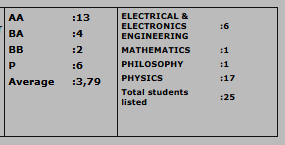
Final results of students
 Ilmar Gahramanov's homepage